When it comes to maintaining motorways in England, keeping maintenance and repairs to a high standard, short time-scale and within budget is imperative if disruption to the road user is to be kept to a minimum. The M180 is no different, running along the south side of the Humber and joining Grimsby to Doncaster, when the road surface began to fail prematurely in a significant and rapid manner, time was of the essence to investigate the cause, formulate a plan and repair before too much degradation caused major problems. This is where specialist contractors make all the difference especially with early engagement with the principal contractor.
A-one+ Integrated Highway Services is a highway engineering provider that designs, constructs and operates thousands of miles of road networks. Established by industry leaders, CH2M, Colas and Costain, A-one+ successfully manages Areas 4 and 12 of the Highways England road network. Over the last 7 years, A-one+ has worked with the team at LMS Highways Ltd, subcontract specialists in repair, in Areas 7 and 14 on various projects. It is times such as these when faced with the urgent repairs to the M180 that the historical working relationship between principle contractor and specialist contractor comes into its own. The team at Area 12 were unaware of the full repertoire of services that LMS Highways could deliver until a supply chain meeting when they realised they had found a contractor with the solutions.
“The package of specialist services supplied by LMS Highways supported the needs of the work well and made it a quick, efficient project with a single point of contact for the works.” Gareth Lewis – VM Manager A-One+.
The M180, a busy motorway in South Yorkshire, was suffering from water ingress problems causing large sections of the hard shoulder and areas of lane 1 to develop large cracks and potholes. The overlaid thin surface coarse had been re-laid in the previous few years with the expectation that this would last for 10-12 years as it had done previously. However, now it was failing prematurely, the hard shoulder and lane 1 needed to be closed, reducing capacity for the road user. The reason needed to be urgently investigated and the lanes reopened as quickly as possible.
A-one+ completed trial holes and FWD testing to identify if the wetlands either side of the motorway were causing drainage issues and waterlogging to the subbase. Agreements with Highways England meant that the project could and should be accelerated as the road surface was degrading rapidly during the investigation process. The question then raised, was how to repair it and how to do it quickly. A delegation from A-one+ attended one of LMS Highways’ popular Lunch and Learn events last year. Managing Director Paul Winter was talking about the successful launch of LMS Civil Solutions specialising in concrete bay replacements, in addition to the other works that the company delivers. This and the specialist knowledge and experience that the company has built up in the 30+ years of trading enabled the collaboration that this project needed.
The team at A-one+ recognised that to complete the required works to the timescales needed, using a mix of contractors simply wasn’t viable. Close project integration and assurance of programme was an absolute requirement, therefore one subcontractor with specialists in the following areas would keep the contractor interface simple and speed up the design process:
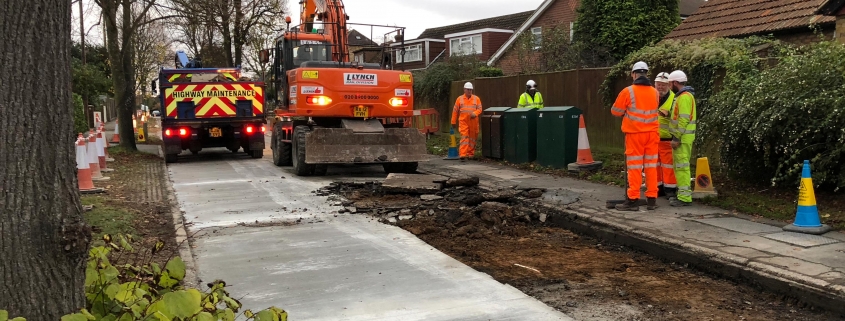
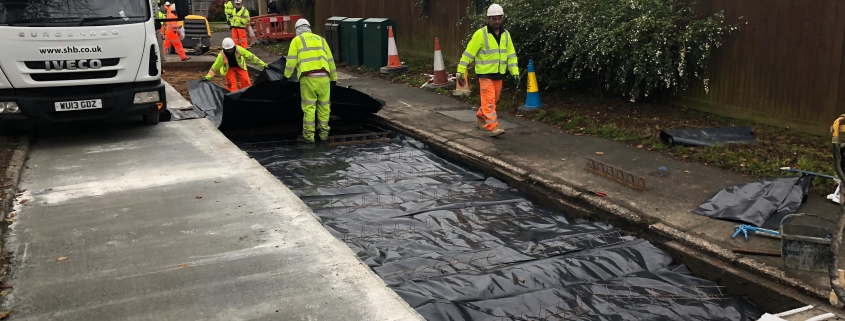
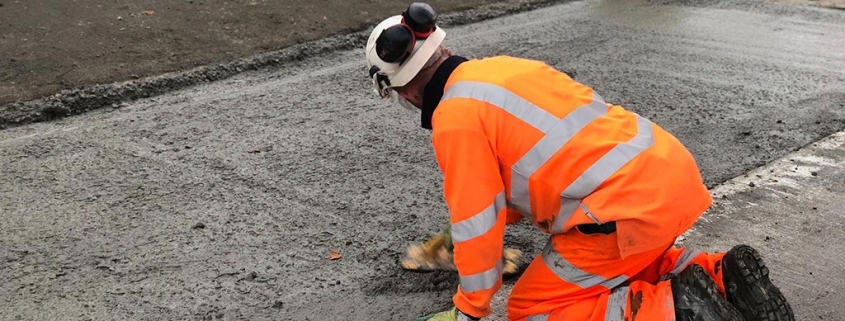
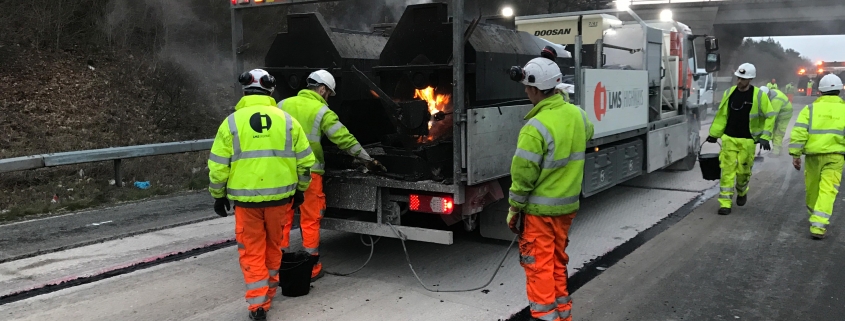
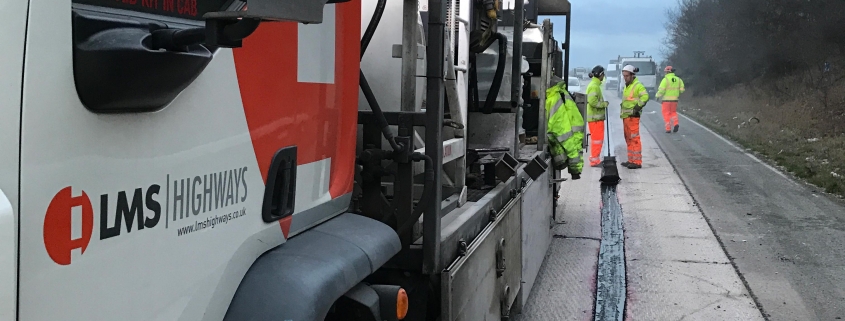
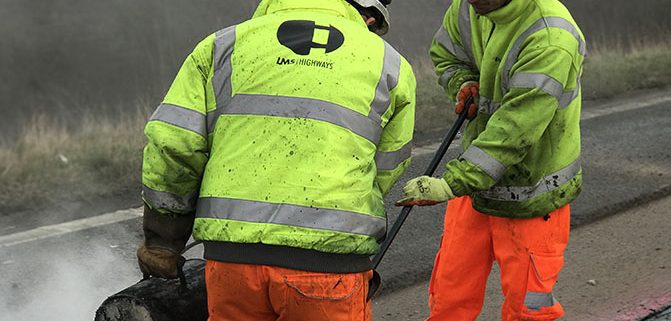
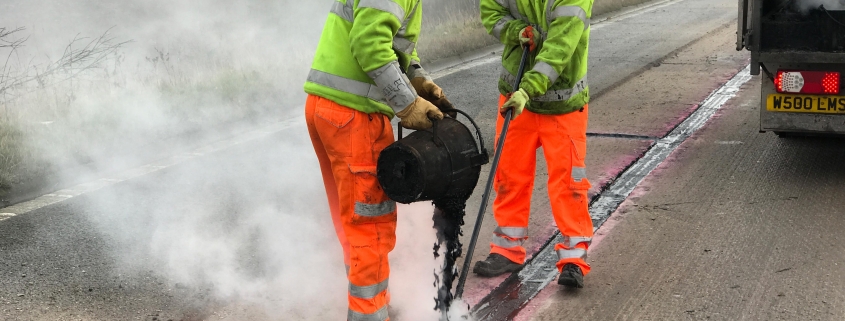
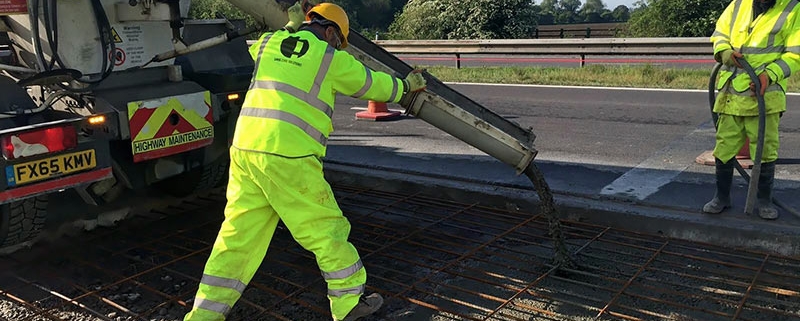
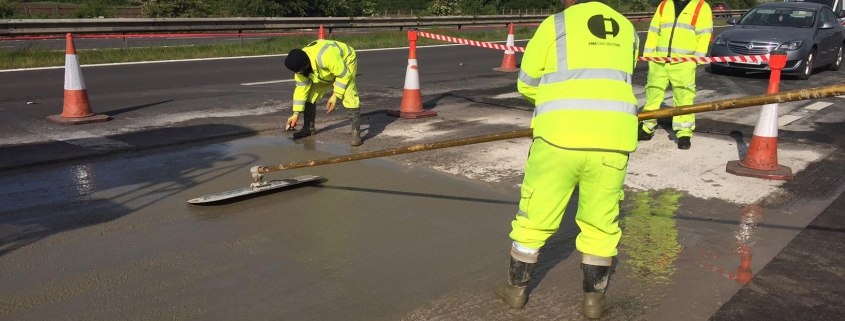
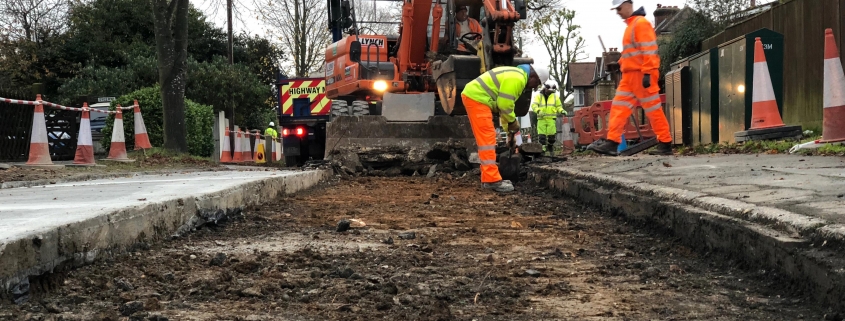
Works took place over a combination of nights/days and weekends to complete the project as quickly as possible. A-one+ milled out the surface course of the hard shoulder and lane 1 in preparation for LMS Highways to commence works. The LMS Civil Solutions team tackled the drainage first followed by 8 shifts of CRCP repairs. Simultaneously the LMS joint repair crews planed out and sealed transverse and longitudinal joints, completed thin bond repairs and plug joints. Once sections of road were completed, the surface course was re-laid, the road marking and road studs reinstated by the LMS road marking crew and the road reopened.
“From our point of view, from the very first discussion, it was a pleasure to work with A-one+. Not only did they have a very clear idea of the challenges but they were very keen to learn from the benefit of our experience in handling larger-scale repair schemes – we felt there was a great deal of collaboration in this scheme.” Paul Winter – Managing Director LMS Highways & LMS Civil Solutions.
Junction 2 slip roads of M180 were a little more complicated as the surface course could not be removed in advance and the busy junction could not be closed during normal hours. To avoid disruption to the road user the slip roads were surveyed in collaboration between A-one+ and LMS Highways prior to a complete weekend of junction closure. Over one weekend, the road was milled, repaired, surface course re-laid, road markings reinstated and road reopened ready for Monday morning rush hour.
Over a matter of weeks, over 11000 lm of joints repairs and 350m2 of CRCP repairs were carried out.
“The package of specialist services supplied by LMS Highways supported the needs of the work well and made it a quick, efficient project with a single point of contact for the works” commented Gareth Lewis, Value Manager – A-one+.“
By combining LMS Highways and LMS Civil Solutions highly experienced teams, they were uniquely placed in the market to deliver these works rapidly. This was due to a single-contractor interface, early contractor involvement and streamlined programming for the project, meaning the work was completed quickly and on-budget, avoiding costly delays for the road user. “From our point of view, from the very first discussion, it was a pleasure to work with A-one+. Not only did they have a very clear idea of the challenges but they were very keen to learn from the benefit of our experience in handling larger-scale repair schemes” said Paul Winter “we felt there was a great level of collaboration in this scheme“.
A-one + were completely satisfied with the solutions provided by the teams and are now looking at further projects in their areas where the LMS ‘Kerb to Kerb’ service would be beneficial.
When it comes to maintaining motorways in England, keeping maintenance and repairs to a high standard, short time-scale and within budget is imperative if disruption to the road user is to be kept to a minimum. The M180 is no different, running along the south side of the Humber and joining Grimsby to Doncaster, when the road surface began to fail prematurely in a significant and rapid manner, time was of the essence to investigate the cause, formulate a plan and repair before too much degradation caused major problems. This is where specialist contractors make all the difference especially with early engagement with the principal contractor.
A-one+ Integrated Highway Services is a highway engineering provider that designs, constructs and operates thousands of miles of road networks. Established by industry leaders, CH2M, Colas and Costain, A-one+ successfully manages Areas 4 and 12 of the Highways England road network. Over the last 7 years, A-one+ has worked with the team at LMS Highways Ltd, subcontract specialists in repair, in Areas 7 and 14 on various projects. It is times such as these when faced with the urgent repairs to the M180 that the historical working relationship between principle contractor and specialist contractor comes into its own. The team at Area 12 were unaware of the full repertoire of services that LMS Highways could deliver until a supply chain meeting when they realised they had found a contractor with the solutions.
“The package of specialist services supplied by LMS Highways supported the needs of the work well and made it a quick, efficient project with a single point of contact for the works.” Gareth Lewis – VM Manager A-One+.
The M180, a busy motorway in South Yorkshire, was suffering from water ingress problems causing large sections of the hard shoulder and areas of lane 1 to develop large cracks and potholes. The overlaid thin surface coarse had been re-laid in the previous few years with the expectation that this would last for 10-12 years as it had done previously. However, now it was failing prematurely, the hard shoulder and lane 1 needed to be closed, reducing capacity for the road user. The reason needed to be urgently investigated and the lanes reopened as quickly as possible.
A-one+ completed trial holes and FWD testing to identify if the wetlands either side of the motorway were causing drainage issues and waterlogging to the subbase. Agreements with Highways England meant that the project could and should be accelerated as the road surface was degrading rapidly during the investigation process. The question then raised, was how to repair it and how to do it quickly. A delegation from A-one+ attended one of LMS Highways’ popular Lunch and Learn events last year. Managing Director Paul Winter was talking about the successful launch of LMS Civil Solutions specialising in concrete bay replacements, in addition to the other works that the company delivers. This and the specialist knowledge and experience that the company has built up in the 30+ years of trading enabled the collaboration that this project needed.
The team at A-one+ recognised that to complete the required works to the timescales needed, using a mix of contractors simply wasn’t viable. Close project integration and assurance of programme was an absolute requirement, therefore one subcontractor with specialists in the following areas would keep the contractor interface simple and speed up the design process: Works took place over a combination of nights/days and weekends to complete the project as quickly as possible. A-one+ milled out the surface course of the hard shoulder and lane 1 in preparation for LMS Highways to commence works. The LMS Civil Solutions team tackled the drainage first followed by 8 shifts of CRCP repairs. Simultaneously the LMS joint repair crews planed out and sealed transverse and longitudinal joints, completed thin bond repairs and plug joints. Once sections of road were completed, the surface course was re-laid, the road marking and road studs reinstated by the LMS road marking crew and the road reopened. “From our point of view, from the very first discussion, it was a pleasure to work with A-one+. Not only did they have a very clear idea of the challenges but they were very keen to learn from the benefit of our experience in handling larger-scale repair schemes – we felt there was a great deal of collaboration in this scheme.” Paul Winter – Managing Director LMS Highways & LMS Civil Solutions.
Junction 2 slip roads of M180 were a little more complicated as the surface course could not be removed in advance and the busy junction could not be closed during normal hours. To avoid disruption to the road user the slip roads were surveyed in collaboration between A-one+ and LMS Highways prior to a complete weekend of junction closure. Over one weekend, the road was milled, repaired, surface course re-laid, road markings reinstated and road reopened ready for Monday morning rush hour.
Over a matter of weeks, over 11000 lm of joints repairs and 350m2 of CRCP repairs were carried out.
“The package of specialist services supplied by LMS Highways supported the needs of the work well and made it a quick, efficient project with a single point of contact for the works” commented Gareth Lewis, Value Manager – A-one+.“
By combining LMS Highways and LMS Civil Solutions highly experienced teams, they were uniquely placed in the market to deliver these works rapidly. This was due to a single-contractor interface, early contractor involvement and streamlined programming for the project, meaning the work was completed quickly and on-budget, avoiding costly delays for the road user. “From our point of view, from the very first discussion, it was a pleasure to work with A-one+. Not only did they have a very clear idea of the challenges but they were very keen to learn from the benefit of our experience in handling larger-scale repair schemes” said Paul Winter “we felt there was a great level of collaboration in this scheme“.
A-one + were completely satisfied with the solutions provided by the teams and are now looking at further projects in their areas where the LMS ‘Kerb to Kerb’ service would be beneficial.
Find out more at one of our regular Lunch and Learn events for industry members. Click here to send us a message.

The work which took place on an already planned overnight closure for other scheduled maintenance also included specialist pressure grouting work and LMS Highways proven concrete repair systems.
“I was very impressed with the process. The level of coordination between the gangs is very impressive to watch.”
THE CHALLENGES
The work took place in Norfolk on a busy trunk road with concrete sections. While overnight closures had already been earmarked for other essential maintenance, three of the bays were damaged beyond economical repair with a further 5 having dropped due to ground conditions and a further 25 requiring spot repairs.
On damaged concrete bays, a repair and maintain approach is normally preferred to the undesirable disruption of closing a major trunk road for a week or more to completely refurbish the surface. However, for concrete bays that have reached a certain level of decay, repair can be unsafe and is most likely uneconomical – the lifespan of these repairs is likely to be between 3-6 months due to the underlying condition of the bay.
As the bays requiring replacement were situated on a single carriageway stretch, access was limited, compounded by other scheduled maintenance work carried out.
The work was also adjacent to a housing estate so there was a pressing need for noise nuisance to be kept to a minimum.
“It appears to be a very viable long-term structural solution for the concrete sections.”
OUR SOLUTION
As well as the obvious cost savings compared to repeated repairs, our highly refined and efficient concrete bay replacement process perfectly solved the needs for the three bays requiring replacement.
The team started promptly at 8.30pm when the closure was initiated, ensuring that the noisier parts of the process were completed early.
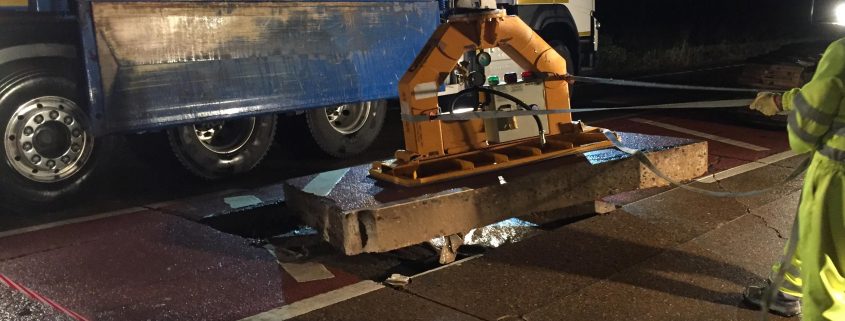
To remove the bay, a vacuum-lift system is used to remove large sections of the slab in complete pieces. Not only is this a quick process but avoids the need for noisy jackhammer and other breaking equipment. If the slab is in a poor condition, two other sophisticated plant systems are used to efficiently remove smaller sections and debris.
The empty bay area is then drained of any residual water, cleared and prepared with a damp proof course and a high-performance drilling rig drills the holes for the horizontal steel dowels.
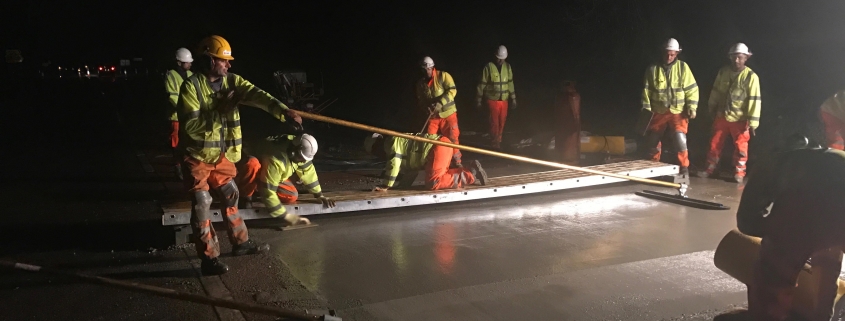
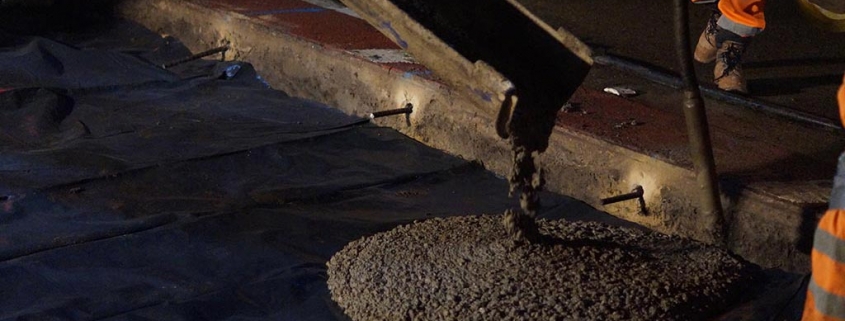
High specification concrete is poured and a friction screed applied before a drying tent is erected over the bay sealing in the heat from high-performance gas burners which will dry the concrete to the point it can be trafficked within 3-5 hours depending on ambient temperature conditions. The temperature of the concrete is measured continuously throughout the drying process. When it reaches the required temperature, the drying profile is analysed and only after strict checks is the bay certified for use by traffic.
Operations causing a noise nuisance were complete well before midnight, meeting the requirements of the customer.

THE RESULTS
Bay replacements completed and ready to be trafficked in less than 5 hours.
Expected lifespan of the replacement is 10 years.
Savings of over 85% over continuous repair regime.
The customer was extremely satisfied with the process.
“I was very impressed with the process. The level of coordination between the gangs is very impressive to watch and there is clearly a very strong leadership from the site supervisor. I observed the pre-shift briefing and was impressed with the level of detail and evident safety culture.
In addition, I was very pleased with the limited noise from the vacuum lifting system and how quick this part was completed, as I’m sure the local residents would agree!
To remove a damaged bay and to reinstate a brand new one in such a short period of time is an amazing achievement and we have identified a number of further projects that will benefit from this process. It appears to be a very viable long-term structural solution for the concrete sections.” Customer Project Manager
The work which took place on an already planned overnight closure for other scheduled maintenance also included specialist pressure grouting work and LMS Highways proven concrete repair systems.
“I was very impressed with the process. The level of coordination between the gangs is very impressive to watch.”
THE CHALLENGES The work took place in Norfolk on a busy trunk road with concrete sections. While overnight closures had already been earmarked for other essential maintenance, three of the bays were damaged beyond economical repair with a further 5 having dropped due to ground conditions and a further 25 requiring spot repairs. On damaged concrete bays, a repair and maintain approach is normally preferred to the undesirable disruption of closing a major trunk road for a week or more to completely refurbish the surface. However, for concrete bays that have reached a certain level of decay, repair can be unsafe and is most likely uneconomical – the lifespan of these repairs is likely to be between 3-6 months due to the underlying condition of the bay. As the bays requiring replacement were situated on a single carriageway stretch, access was limited, compounded by other scheduled maintenance work carried out. The work was also adjacent to a housing estate so there was a pressing need for noise nuisance to be kept to a minimum. “It appears to be a very viable long-term structural solution for the concrete sections.”
OUR SOLUTION
As well as the obvious cost savings compared to repeated repairs, our highly refined and efficient concrete bay replacement process perfectly solved the needs for the three bays requiring replacement.
The team started promptly at 8.30pm when the closure was initiated, ensuring that the noisier parts of the process were completed early.
To remove the bay, a vacuum-lift system is used to remove large sections of the slab in complete pieces. Not only is this a quick process but avoids the need for noisy jackhammer and other breaking equipment. If the slab is in a poor condition, two other sophisticated plant systems are used to efficiently remove smaller sections and debris.
The empty bay area is then drained of any residual water, cleared and prepared with a damp proof course and a high-performance drilling rig drills the holes for the horizontal steel dowels.
High specification concrete is poured and a friction screed applied before a drying tent is erected over the bay sealing in the heat from high-performance gas burners which will dry the concrete to the point it can be trafficked within 3-5 hours depending on ambient temperature conditions. The temperature of the concrete is measured continuously throughout the drying process. When it reaches the required temperature, the drying profile is analysed and only after strict checks is the bay certified for use by traffic.
Operations causing a noise nuisance were complete well before midnight, meeting the requirements of the customer.
THE RESULTS Bay replacements completed and ready to be trafficked in less than 5 hours. Expected lifespan of the replacement is 10 years. Savings of over 85% over continuous repair regime. The customer was extremely satisfied with the process. “I was very impressed with the process. The level of coordination between the gangs is very impressive to watch and there is clearly a very strong leadership from the site supervisor. I observed the pre-shift briefing and was impressed with the level of detail and evident safety culture. In addition, I was very pleased with the limited noise from the vacuum lifting system and how quick this part was completed, as I’m sure the local residents would agree! To remove a damaged bay and to reinstate a brand new one in such a short period of time is an amazing achievement and we have identified a number of further projects that will benefit from this process. It appears to be a very viable long-term structural solution for the concrete sections.” Customer Project Manager
Find out more at one of our regular Lunch and Learn events for industry members. Click here to send us a message.

LMS Highways Ltd.